

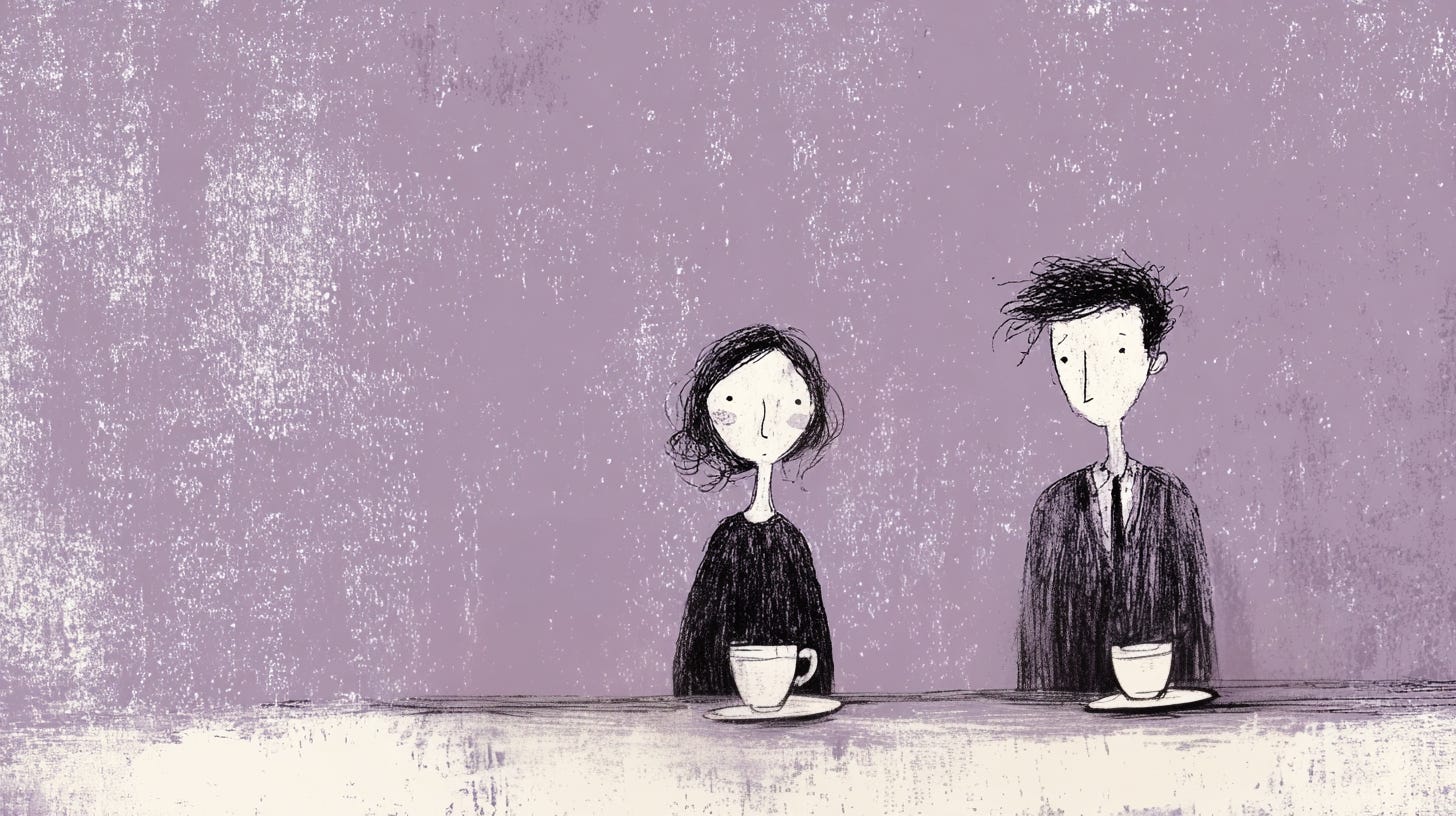
There’s an old truism in work, backed up in the data, that we take a job for salary and we quit because of culture. Friendship plays a key part in this perspective.. Any leader wrestling with the conundrum of making their teams more engaged with their culture will find their attention drawn to the stat that the biggest predictor of workplace engagement is whether you have a best friend at work.
The data from the Gallup Global Workplace Report says that employees who have a best friend at work are seven times more likely to be fully engaged in their jobs. I’ve presented this to hundreds of executives and the response is always the same: ‘Best friend? What am I, six?’ I should add a detail here, it’s always men who say this. So I’m here to tell you that yes, even big boys have best friends.
Critically, for the friendless executives who scoff that friendship at work is merely an opportunity to slack off, Gallup’s data suggests that having a best friend is strongly linked to business outcomes - such as increasing profitability and higher employee retention. Workers reporting that they have a best friend at work are twice as likely to recommend their employer to others, to get more done in their jobs and to enjoy their work.
The complication of this data point is that the level of people reporting a best friend at work is at the lowest level ever. The decline is especially harsh amongst young people - the 21% of under-35s who report having a workplace best friend is the lowest number ever recorded.
Why are we not making friends as much? It’s possible that the mechanics of modern life are conspiring to make us fear that our colleagues just aren’t that into us. I’m going to let you know the problem: phubbing has killed your culture.
What the heck is phubbing? Phubbing is what psychologists have termed the phenomenon of ‘phone-based snubbing’. When we’re with someone and end up submitting to the magnetic lure of our devices. Conversation goes quiet. None of your colleagues had spent the weekend binging the same content as you. The little thing is sitting there plaintively pleading for a tiny crumb of attention.. ‘just have a little look - I got the good stuff for you. Just one little peek.’ We look at our phones and kill the vibe dead.
A meta-analysis covering nearly 20,000 participants found that when people were phubbed by their romantic partners it significantly diminished their relationship happiness. Partner phubbing caused increases in conflict and jealousy. This also held for work. In our jobs even the mere presence of a smartphone during face-to-face interactions starts reducing feelings of closeness. The worst of all is being phubbed by our bosses.
Studies found that boss phubbing eroded the foundations of workplace connection: wiping out employees’ sense of meaningfulness and safety at work. In other words, a manager’s wandering attention both feels rude and makes us feel like we don’t matter.
It’s maybe no surprise then that when our colleagues attention gets sucked into their phones we end up thinking they don’t like us much.
This belief that other people don’t like us to the same extent as we like them is sometimes called the ‘liking gap’. I’ve got some good news for you. It turns out not to be true - our colleagues like us more than we realise. Dr Gillian Sandstrom is a researcher whose work explores her fascination with our conversations with other people - whether colleagues, friends or strangers. She’s just published a fabulous new book ‘Once Upon A Stranger’.
Sandstrom says that conversations are often initially intimidating because they pose risks of social rejection and uncertainty. As we don’t know what our conversation partner is thinking we often fear the worst. Now imagine the self doubt when someone pulls out their Nokia. ‘The result is people chronically underestimate how much others like them and enjoy their company,’ Sandstrom says. ‘This liking gap exists not because people fail to signal they like each other - in fact, the signals are right there for all to see - but because people are too focused on their own self-critical thoughts to notice.’
When it comes to the workplace, the news actually gets worse. What’s striking is that this liking gap doesn’t close once we know people. One of Gillian Sandstrom’s collaborators, Erica Boothby, extended the research into workplaces and found the liking gap persisting inside teams. They found that colleagues who had worked alongside each other still systematically underestimated how much the others liked them - even after six months of collaboration. While the gap was widest in the earliest interactions, it didn’t simply dissolve with familiarity. And the consequences were specific: people who doubted how their colleagues saw them were less likely to ask for help and less willing to speak openly.
Sandstrom gives a bit of advice that feels like an important rule to live by, ‘Conversations are a great source of happiness in our lives, but even more than we realise it seems, as others like us more than we know.’
What does it mean for us at work? Well it’s an important reminder that there’s a bit more love in the Zoom than we might guess. It’s highly possible that the person sitting opposite you thinks more of you than you realise. Even if they occasionally distractedly check their Instagram. The liking gap persists because we’re all awkward souls trying to find a way to connection, and those darn phones are promising a quick hit of delight.
The fix isn’t complicated, even if it isn’t easy. Talk about it with your teams. Put the phone away. Stay in the conversation a little longer than feels comfortable. The friendship data doesn’t ask you to invent closeness it just asks you to stop actively undermining it.
There’s an important lesson for us all. The best friend at work that drives all that engagement, retention and meaning started as a colleague who you bothered to talk to.
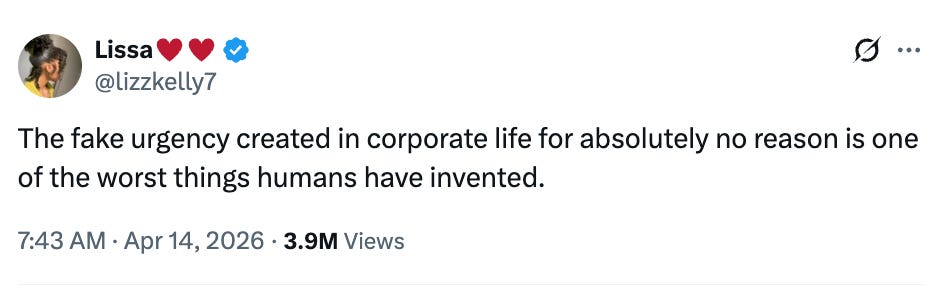

I was really taken with this post by Neil Perkin, which suggests that ‘the further you are from the actual work, the simpler it looks’ to replace it with AI, those who are close to jobs know it’s not remotely close
For all Anthropic’s talk that software coding is ‘going away first, then all of software engineering’ they currently have 454 open coding roles live on their website
Gallup released the latest sweep of their State of the Global Workplace report. TL;DR - UK engagement is static at 10%, US is down at 30%. (Generally countries with universal healthcare, rather than employer provided, have significantly lower engagement which does pose questions about the data)
One interesting take is that Gallup say managers have happier lives but worse days, reporting that they have the highest levels of stress, unhappiness, sadness and loneliness in the workplace
The Wall Street Journal asked why work has become so joyless and concludes we’ve got rid of all the fun of our jobs [free version]
Some coverage this week of Duolingo sending a taxi for candidates’ final interviews (and then asking the cab driver what they were like) [free version]. This isn’t fully new, Netflix Chief Talent Officer said she’d ask the receptionist which candidates were d1ckheads. It feels a little creepy but I guess it only catches people who aren’t genuinely kind. ‘The real test of character is how you treat someone who has no possibility of doing you any good,’ as George Orwell told us
Relatable: Artemis astronauts reported having ‘two Microsoft Outlooks, and neither one of those are working

Two podcasts today because… of reasons, and the first rule of adult life is that no one cares about reasons.
Firstly a wonderchat with Gillian Sandstrom about the joy of chatting to strangers. I love her work. Her new book is one of those titles that has genuinely inspired me to change my behaviour. Talking to strangers is a muscle that anyone can work everyday.
Listen: website / Apple / Spotify
Next up Pippa Grange is one of the world’s leading performance psychologists, having become renowned by working with Gareth Southgate’s mens football team.
I was really struck by the honesty in her new book that she’d suffered a major episode of burnout. An episode that left her ‘on the sofa’ unable to move.
When someone that attuned to their body and mind can fall victim of this, what does it mean for the rest of us?
I talked to her about her new book and how we should all think about burnout, performance and our priorities in life.
Just had another friend tell me she traded her iPhone for a dumb phone. “Life is different” she said….”but better.” Not that we can all do that, but there is so much truth there. The instant job hack is this: phone down, eyes up, and ask everyone about their lives outside of work. Connection is what life is all about and we rob ourselves of that richness if we only allow for connection outside that work place.
I’ve experienced phubbing! What a great word. Much less funny when you’re on the receiving end of it, though.