

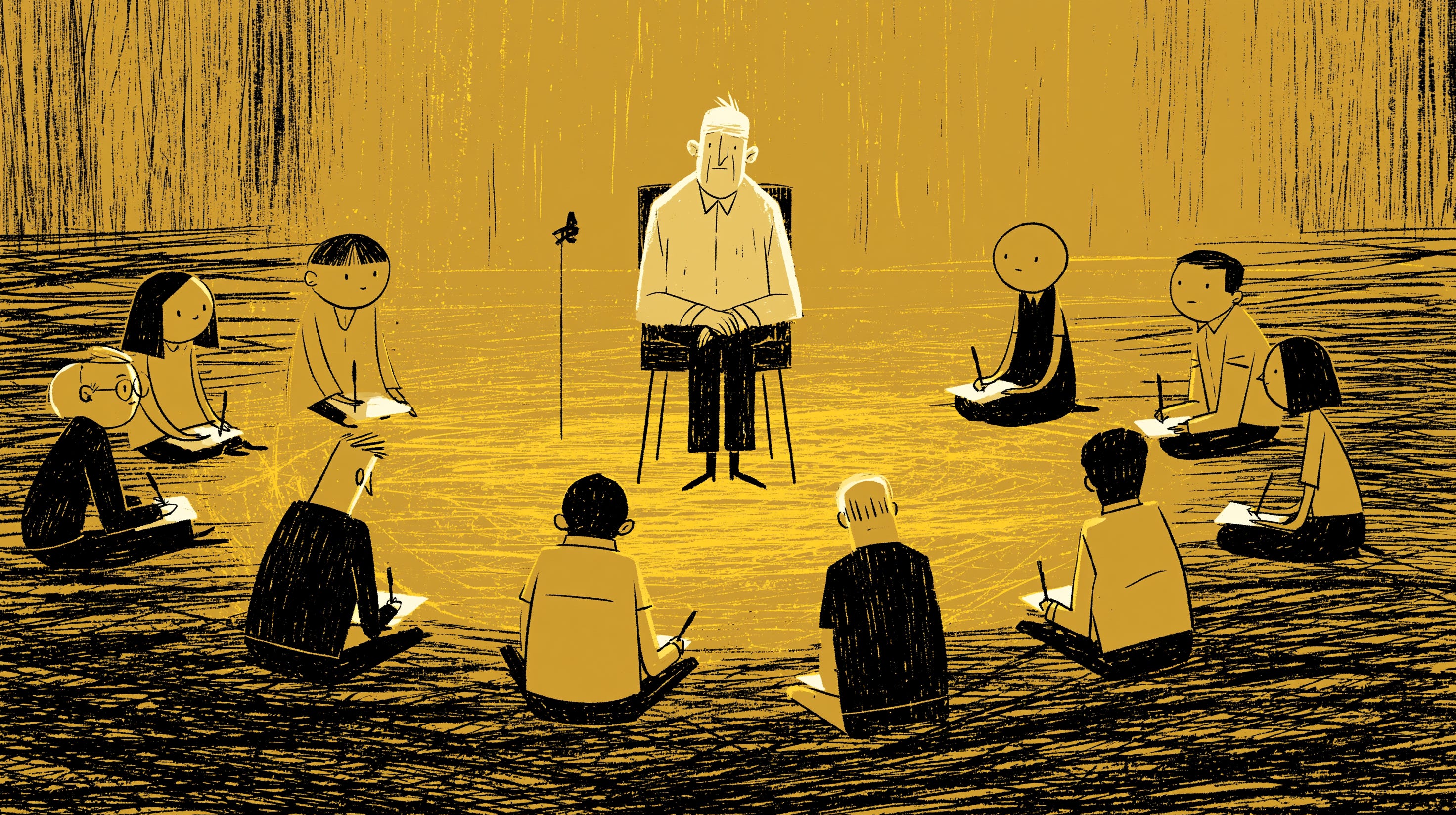
Last year I shared a TikTok (and later a podcast discussion) with the brilliant Nick Shackleton-Jones where where he ascribed bosses' desire to have workers back in the office full-time to an urge to feel significant. (Make sure you check out his original post). This week new research has been published which goes some way to confirming his hunch was right.
Adam Grant is one of three researchers who found that being in the office together was less about the professed desire for collaboration or higher productivity, it was designed to make a boss feel more important.
In a piece for the New York Times about his research Grant says that:
‘As a general rule… it turns out that ordering people back to the office full time is a power and status move. It’s a signature strategy of leaders who exhibit narcissistic qualities. They see any kind of remote work as a threat to their authority and admiration. They want to be worshiped at the office altar.’
Grant (and his co-researchers) specifically take aim at the organisations who have insisted on a full RTO, suggesting that that trend accounts for about a third of US employers. Their conclusion suggests that the bosses who are insistent on getting the team back every day are telling us something powerful about themselves:
‘The only trait that consistently predicted objections to remote work was narcissism - the tendency to be self-centred and entitled. The higher the opinions of themselves leaders expressed, the more they coveted power and status - and the more they favoured return-to-office mandates.’
For Grant the demand to have employees around is all about ‘command and control’. RTO-obsessed bosses want to be able to ‘intimidate by hovering’ by people’s desks or ‘by summoning people to a conference room and pounding their fists on the table’.
I found that the research was best consumed side-by-side with another piece highlighted by the New York Times last week. That research was clear that some in-office time seemed to have a benefit to our wellbeing and team cohesion.
The second research study found that remote workers who lived alone became increasingly isolated, including spending less time with friends. ‘To maintain… connection, workers need doses of in-person time with one another,’ the NYT concluded.
Some commentators have pushed back on the second article suggesting that the relationship might be coming the other way round (that people feeling withdrawn choose to WFH and that the withdrawal came first.)
To my mind it’s an illustration of what most of us have recognised that this isn’t an either/or, it’s an and. Teams need to have some face-to-face time to sustain a healthy sense of connection.
It reminds me again of the new book by Professor Nick Epley that I mentioned last time. Most tellingly Epley found that when people were told to behave more extravertedly than they felt they ended up feeling happier and more energised. Epley’s conclusion was that extroversion was adaptive and that we should seek to encourage it in organisations. (There’s a great interview with him here).
From an organisational perspective the implications seem to be holding firm on a balanced approach to work. Yes, we can gift the agency to our team to let them work some of the time at home. And also we want everyone to commit to spending some of the week together, behaving like part of a team.
(In fact after writing this I saw that Nick Shackleton-Jones posted his own response to the research:
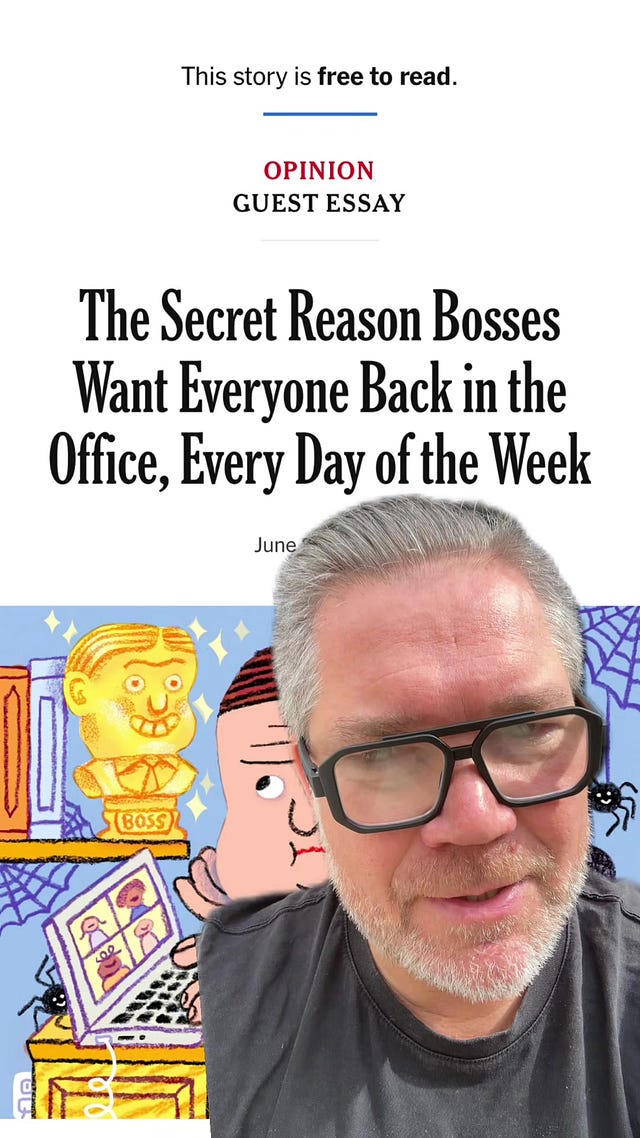
 Tiktok failed to load.
Enable 3rd party cookies or use another browser
——Sponsored link——

Cut through complexity with one connected workspace.
Up to 40% productivity is lost to fragmented tools and constant context switching. Adobe Acrobat Studio brings documents, collaboration, and creation together in one place. This allows teams to plan, review, and communicate faster, with fewer tools and stronger alignment. See how teams work together.

‘The best person I’ve ever come across in football’. I loved this so much. A clear example that great culture often needs humour as a lubricant. England footballers saying how important Jordan Henderson is for the team’s culture because he manages to balance being socially amusing, while being able to tackle knotty relationship issues. ‘The best guy I’ve ever come across in football’. ‘He’s so funny’, ‘he’s the funniest guy at this camp’. ‘If we did a blind ranking of who people want in the camp, he’d be in everyone’s top 5’, ‘If there’s a problem staff will go to him to sort out the issue’. Beautiful to see a support character getting such recognition. It’s a reminder that you don’t need to lead from the front and that leaders are found throughout teams.
‘Core engineering folks feel treated like trash"‘: really interesting article about the (destruction of the) engineering culture at Facebook (Meta). For the first 20 years of the company the ‘move fast’ culture was seen as the secret weapon to getting rapid progress made. At some point in a stage Post-Covid reflection Zuckerberg decided that the organisation had become entitled, slow and ineffective, and he went to war with his own employee culture. Engineers who for a long time were told they had the autonomy to choose what they worked on were now ordered to work on the mundane chore of ‘data labelling’. There’s been so many bad stories on this one, the main takeaway is that you can’t treat people (and culture) with disdain and expect it to have no consequence on how they turn up for work.
Thank you for the dozens of people who got in touch detailing projects helping the NEET generation. I’d still love to hear more - tell me about your projects and plans please.
I love working remote. I wouldn't mind a hybrid policy if it wasn't visibility based but purpose-driven. Like give me a good reason to come in. And that reason isn't for the vibes. The vibes at so many companies are toxic, then I'm forced to mask in person so I'm not deemed a problem.
I wonder what the right approach is. A hybrid model?