

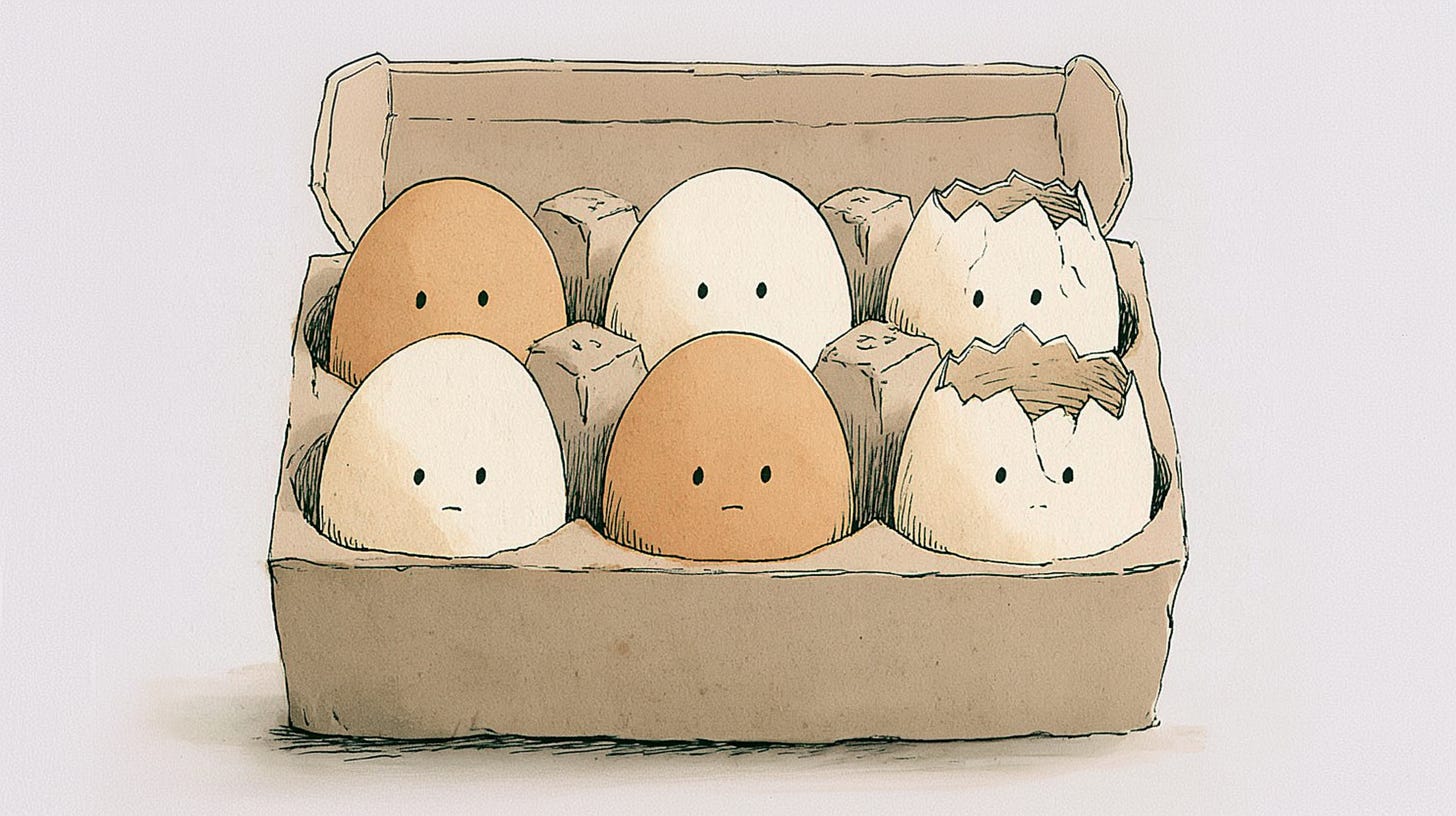
‘Many young people had spent years in their bedroom’
You’ll have probably seen the coverage of the UK’s NEET crisis, reflecting the million young people who now fall into the categorisation of not being in employment, education or training. Another brilliant TikTok by Dani Payne put me onto a report ‘Inside the Mind of a Young NEET‘ that explores the lived experience of the young people receiving the NEET label.
The document is a rich 72 page exploration of the lives of these struggling young people. Michelle Obama last week said that these young people need to be more resilient (puke), but the report explains something more complex than that. It opens by preparing readers that many of the stories it contains are heartbreaking.
What comes across is young people who have been written off by teachers but who are learning Russian in their rooms at night. Youths who have learned technical internet skills of editing or web design but have no way to showcase them
Along the way caring responsibilities, Covid and economic shocks have all served to upend hopeful young lives. The world they experience is the ‘rejection economy’ where hundreds of applications aren’t even met with a reply.
The report’s writers interviewed 400 young people as part of their research. ‘Many young people had spent years in their bedroom,’ they memorably observe.
‘They are not waiting for lower expectations: they are waiting for real chances, honest guidance and people who do not mistake uncertainty for lack of ambition.’
‘We have created circumstances - run the economy into the ground, locked children away during lockdown, regimented them in schools, turned a blind eye to bullying, given them the social media tools of destruction - and then let them drift.’
Once you’re immersed in the report you get an awakening sense that we all need to help solve this. We need to find a way to rescue some of these stranded young individuals. As the report concludes: ‘Unless we act, the country has no future.’
I’d love to hear from organisations or individuals who are striving to help here. Get in touch.
Read the report: Inside the Mind of a Young Neet

This month I’ve really enjoyed reading Nick Epley’s book Hello (it’s titled A Little More Social in the US because publishing is super smart and understands the modern world). The book is a celebration of the life enhancing powers of interacting with other people - even if we might find such things initially anxiety inducing. I was especially interested in the chapter exploring extraversion and introversion, how they aren’t fixed traits but are adaptive conditions that we can seek to develop. Epley makes the case that being a little more extroverted is associated with us being happier, even amongst people who label themselves as introverted. His work has clear workplace implications. I hear repeatedly from leaders that their culture has become more introverted, more insular and less connected. Epley paints an alternative where organisations recognise that they become happier by leaning into the discomfort of connection. Inconvenience is the price of community, we might conclude.
Better culture translates into better patient results. NHS trusts that exhibited greater empathy also showed better financial results and had higher staff wellbeing:
“The average NHS trust empathy score was six on a scale from one to 10. For every 2.5% increase, the researchers saw a 76% greater chance of the CQC rating a trust good or excellent for patient safety, and a 46% increase in being rated good or excellent for effectiveness. Trusts that scored highest for empathy spent hundreds of thousands of pounds less on agency staff and consultants.”
The New York Times asked experts, including Ethan Mollick, to imagine what a mature AI-enhanced workplace will look like. (I’d recommend listening to it, rather than reading it).
I liked this guy who tracked his stress levels at work, mapped it against who he was meeting at that those times to produce a leaderboard of agg:

I’ve been looking for live examples of job displacement this week. In fashion Zara and H&M have started using ‘digital twins’ of models for clothing shoots. Interestingly they are (currently) paying models the full price but photographers are losing business. Martin Scorcese made headlines when he switched from human drawn storyboards to AI generated ones.

Sarah O’Connor is a journalist for the Financial Times who specialises in writing about work and the evolution of our jobs. Over the last year or so that has meant a lot of reflection about AI job displacement.
In her new book, We Are Not Machines, Sarah reflects on how technological change is reshaping the workplace - and the invisible enshittification it often brings with it. Sarah has a strong message: firstly that we should have more belief in the unique strengths of human labour, and secondly that individual agency is the most important differentiator in our favour.
It’s a brilliant conversation that gives a flavour of her book.
Also love the guy who tracked which work colleagues caused him most stress – brilliant!