

Last week I was fortunate to speak at an impressive event by market research agency Watch Me Think.
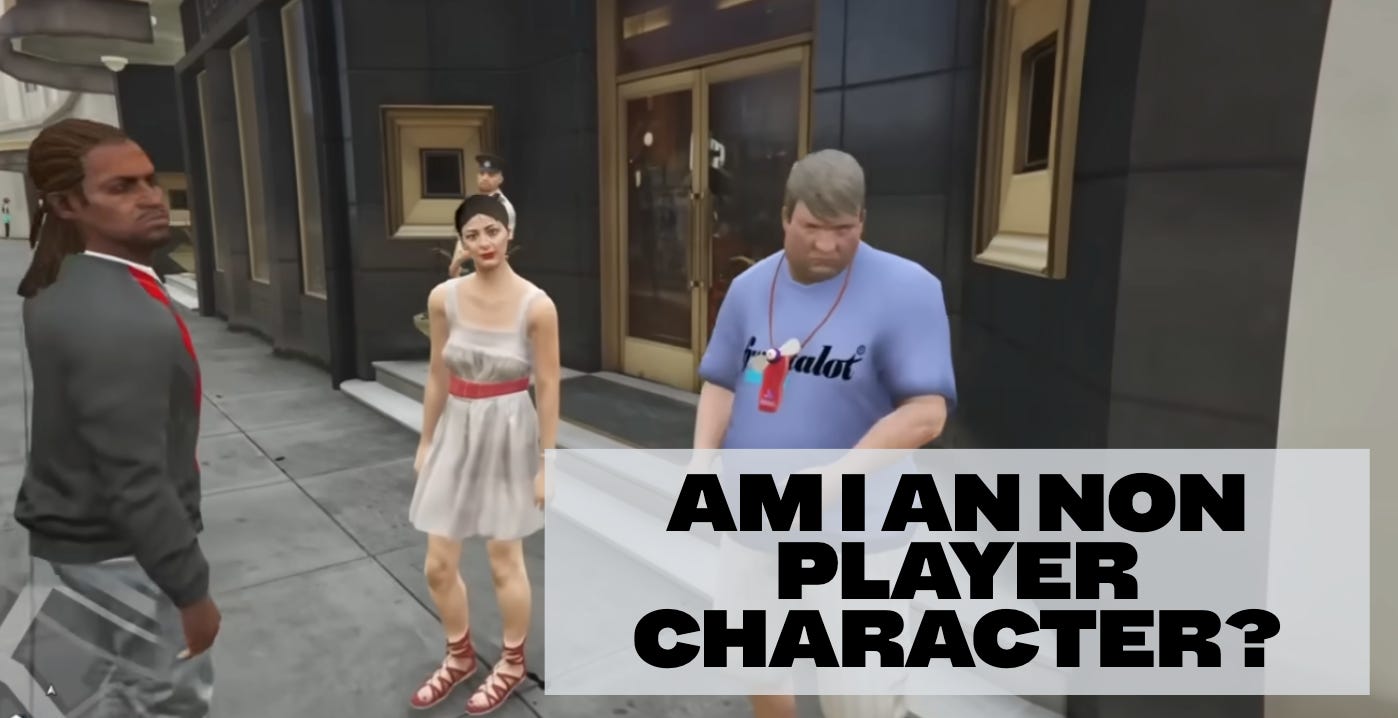
My talk opened with the scenario, 'my work turned me into a NPC (and no one told me)’. An NPC is a gaming term for the inert non-player characters who wander past you in video games.
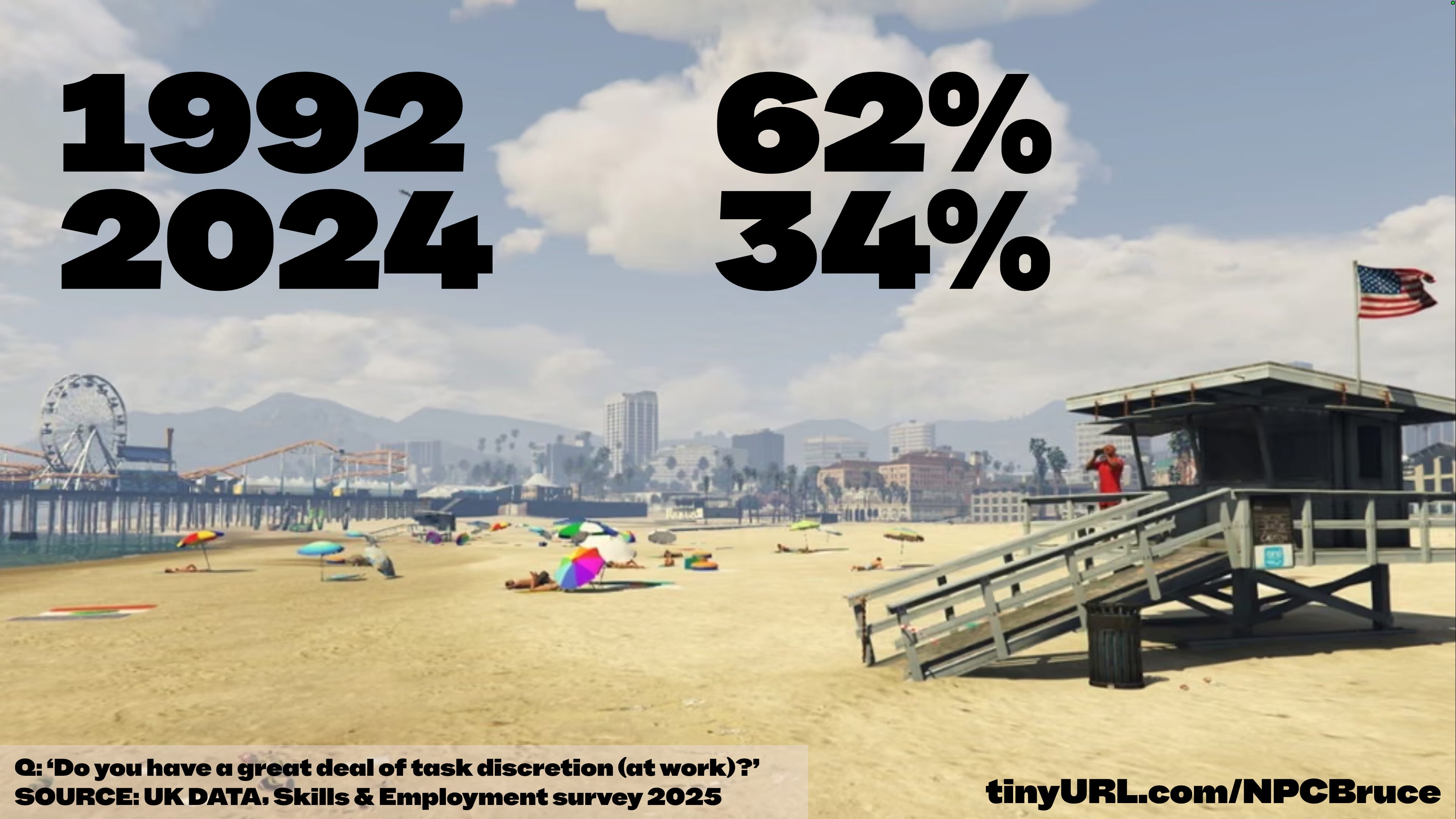
I opened with stories that explained how we’re seeing people at work having less and less impact in their jobs. Indeed a tracking study running since 1992 has found that the amount of workers who believe they have agency over the way they do their jobs has almost halved. Many of us really do feel like we’re non-player characters at work.
I lay out two solutions, one of them leaning on examples from Shopify, Octopus Energy and the Ritz-Carlton. You can check out the presentation here. The first three minutes of the talk didn’t record so you’ll first see me at my desk filling in the gaps before jumping into the talk itself:
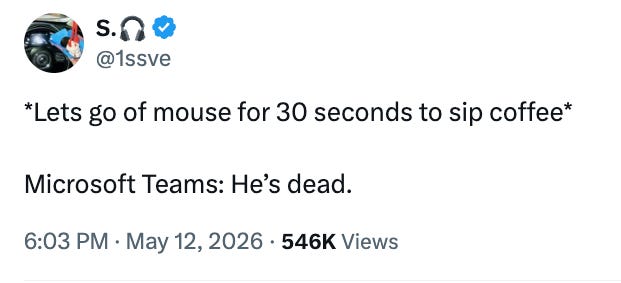

Gen Z boos the computer
I love booing. A very under-utilised way of giving fast feedback to people. And there’s no point having the power of booing in your locker and not using it. I’ve booed DJs, music acts, colleagues and bosses but little excites me as much as the idea of booing commencement speeches.
Commencement speeches, that art form where a successful person, intoxicated by the random good fortune in their own life, opines on the universal secrets of success. I loved seeing the kids of Gen Z putting their booing powers to good use this week. Former Google supremo Eric Schmidt (net worth $65B, currently in court with S.A. charges against him) got a wheelbarrow full of feedback as he gave a speech praising AI at the University of Arizona. ‘I know what many of you are feeling about [AI]. I can hear you. There is a fear.’
If you watch the clip the fear seems to be coming mainly from trembly-voiced Schmidt who no doubt dashed straight off to his underground bunker.
Gloria Caulfield, who works in Tampa Bay real estate, and probably had no business getting involved in AI-chat, found herself getting some timeline shame, when her own speech was booed. She excitedly praised AI ‘as the next industrial revolution’ and the kids asked her to dial down the froth a little.
The Wall Street Journal reports that the growing hostility towards AI is unprecedented in the speed of arrival and predicts that full scale protest is likely to follow next. Research suggests that young people have seen friends struggle to get jobs and have decided which side they’re on.
Microsoft warns of the Transformation Paradox
One of the organisations that might need to think about reframing AI is Microsoft. The tech giant released 2026’s Work Trends Index this week, research designed to pump up the tyres on AI usage in offices.
The new sweep finds that organisational factors - like culture and managerial support determine how the new technology is landing inside the workplace.
Two thirds of respondents said that AI was helping them switch to higher value work - but that there was frustration about the lack of corporate ambition. At the heart of the research was the ‘Transformational Paradox’ where employees are ready to reinvent their jobs but find themselves slowed down by the organisation and systems around them.
One example of how top-down AI directives are going wrong is from Amazon. Reports emerged saying that quotas and leaderboards created to drive AI use were being worked around by engineers lining up dozens of pointless prompts (FT report)