

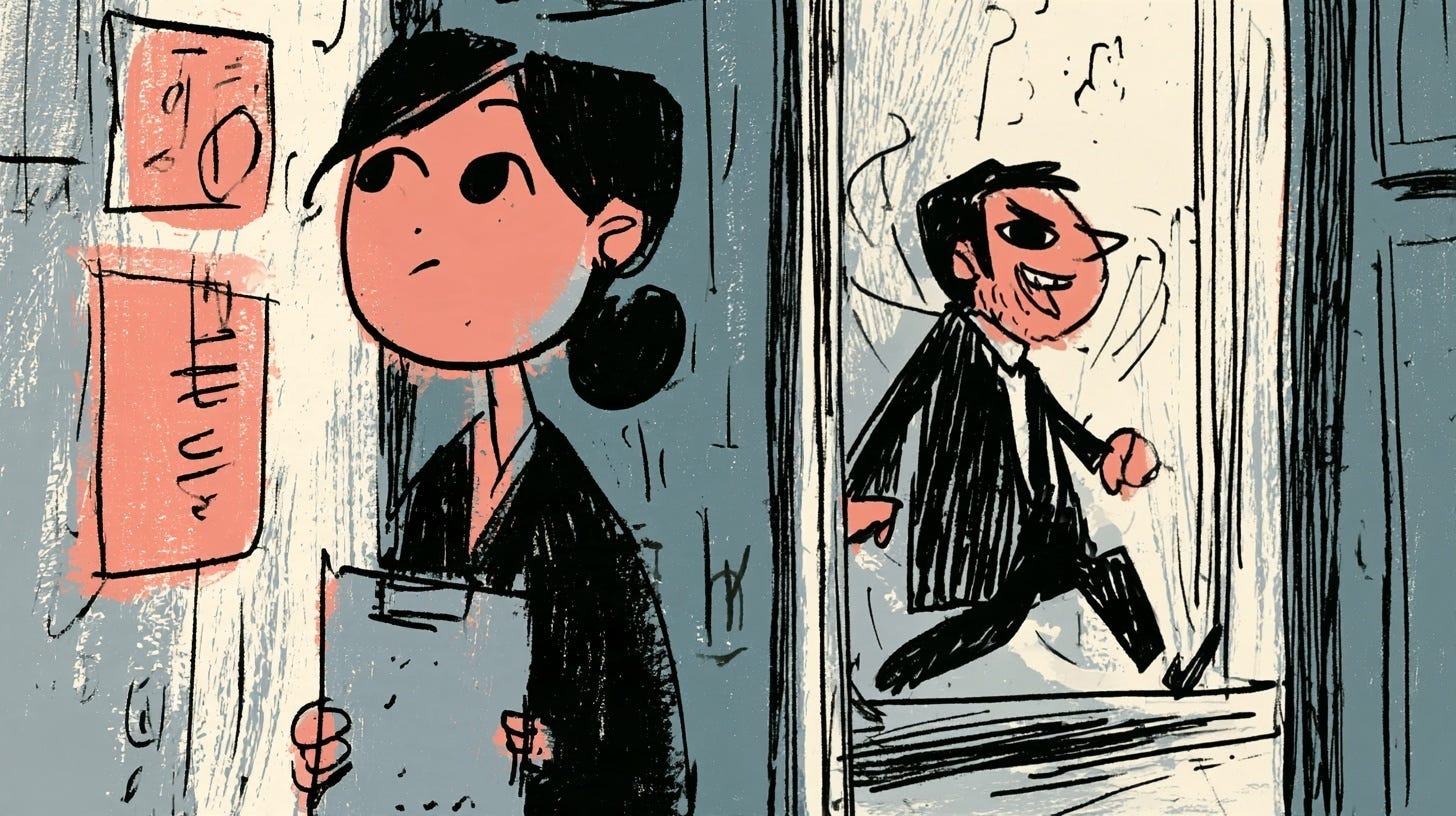
The philandering boss is back. We’re told that The Market, the faceless judge of all societal change, is happy about it and stocks are up. ‘The trillion-dollar man’ was heralded for an (almost day-long) rally in stock prices. In a year that saw Gianni Infantino survive a GTA-style heist on the World Cup by running around until his wanted status disappeared, one of the billionaire oligarchs has now returned to his throne by committing to go to therapy. Wired magazine quoted an Nvidia worker saying, ‘I’m not doing any HR training ever again,’ and it’s hard to disagree.
We know that an organisation’s culture is defined by the worst thing it’s willing to tolerate and there are lots of reasons to think we’re in the middle of an immoral stage of business. Just when you think it’s coming to an end, there’s always something to bring the optimists back down to earth.
Reflecting on what businesses tolerate is an instructive exercise. The reason why something is tolerated is almost always related to the power of the individual involved. This is evident with the growing attention to how HarperCollins used non-disclosure agreements to cover up for errant author David Walliams. Walliams was the most important cash cow at the publisher and a succession of leaders wrestled with the trade-off: moral integrity vs a strong end-of-year report. It’s heartening to see the UK government moving to ban workplace NDAs.
Obviously of even bigger scale is the return of Jensen Huang to the helm of Nvidia. The decision seems to have been made to give a short-term hit to the chipmaker’s stock price. A hit that is already crumbling away from its initial euphoric bump. Trump sees the Dow Jones as more important than his poll ratings - a deal that gets his score back up is always worth doing in the President’s mind.
But what does any of this say about the way we do business? Brian Elliott does a great job of demonstrating why the return of Huang is so egregious, ‘when you’re a founder, they let you do it’, as Elliott frames it. There’s a long line of research into bosses who break the rules (whether drink-driving or cheating on their marriage) and Adam Grant reminds us that ‘when people think no one is watching that they reveal their character’.
‘Research demonstrates that people who cheat on their spouses are more likely to cheat in their jobs… Financial advisers who pursued extramarital affairs were more likely to be fined, fired, suspended or banned for violating laws or compliance rules. Police officers who were unfaithful to their spouses were more likely to be disciplined or reprimanded for corruption, bribery, excessive force and criminal misconduct. And companies led by serial philanderers were roughly twice as likely to misstate their finances and face class-action lawsuits.’
The initial departure of Huang had set the dogs running, journalists began asking employees about their experiences at the firm. The finished accounts have given a wretched account of an organisation operating under a bullying emperor boss. Some of the stories are astonishing, including one about a senior leader being crucified after his chair ‘produced a fart noise’.
The New York Times gives a fuller account of the routine humiliation served up to Nvidia employees.
‘In one instance, Mr. Huang went around a room, telling managers he would kill them... When he reached a person in their 70s, Mr. Huang said that the person was really old and everyone hoped they would drop dead.’
He threatened one leader that he would rip both his arms off and beat him to death with them. Another was told Huang would rip his head open and would pee on their brain.
When HR told him he couldn’t keep threatening to murder and mutilate employees, he fired the HR boss. Of course he did.
All of this brings us back to the opening quotation. There’s a growing resignation inside organisations that HR training courses, often delivered in soul-breaking online modules, are less about enacting behavioural change. They’re more about limiting the legal exposure of the organisation. ‘Oh no, we did a training course telling people not to do that!’ An exercise in box ticking is completed and everything carries on as before.
Then the veil drops and workers see that the training modules were just to protect the higher ups, the same bosses who believe that rules don’t apply to them. The bosses who fire the HR people trying to implement those rules.
Until a month ago the story about the Nvidia culture was one of success. This year Glassdoor named it the number 1 place to work in tech, the number 3 company overall in the US. The flat corporate structure was pointed to as proof of a fast-moving company unrestrained by bureaucracy. In truth Nvidia’s high scores for culture demonstrate that the decisions of optimising for financial reward over principles extend way beyond the boardroom. The average Nvidia found themselves benefiting from stock grants that had risen to bring them riches beyond their wildest dreams. Engineers had found themselves becoming millionaires, leading to them rationalising a lot of bad behaviour as part of the way the sausage got made.
How should the rest of us interpret this? Professor Rob Briner says that the start point is not talking about culture at all - his take (that he addressed in a podcast with me this year) is that we need to explicitly discuss behaviours, not indulge the vagaries of culture chat. Behaviours are visible and specific, culture is often subjective. Focusing on behaviour leads to fewer threats to chop limbs off.
None of this is easy. As Benjamin Laker told us ‘the more you talk about culture the less people believe you’. This is a lesson that the Met Police are a reminder of this week: for all their talk about changing culture, the behaviour of bad officers hasn’t changed.
I’m an optimist. You might be aware of this condition, it’s a deluded state of mind where an individual ignores the evidence of the world to believe that next year is going to be better. As an optimist, I’m convinced that as the caffeine-hit of Huang returning fades the stinky tang of this is going to linger.
Employees are fed-up of overpaid bosses deciding that the rules don’t apply to them. Rather than the man in the leather jacket being a saviour, there’s a chance he becomes an emblem of the toxicity of big business. That we’ll move on from this era of business determined to change the behaviours that got us here.

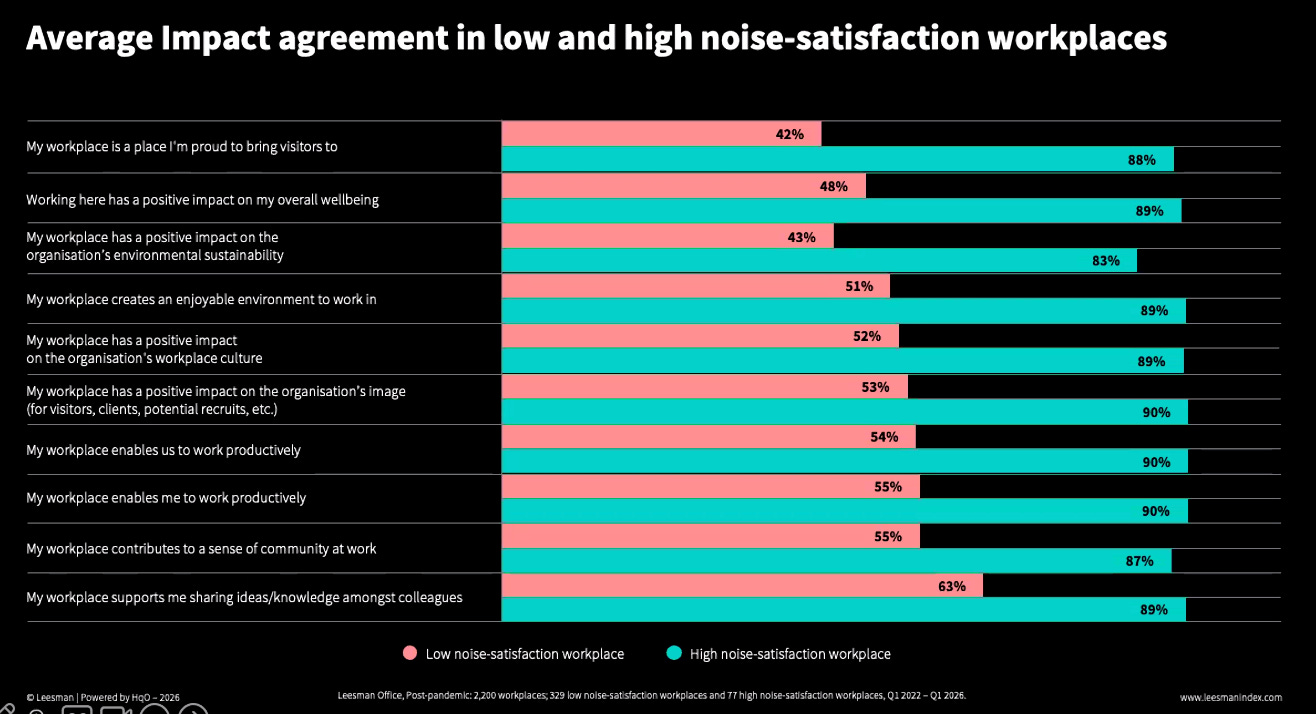
64% of office workers say they are dissatisfied with the noise at their work: In last week’s newsletter I mentioned the latest research by Leesman, which found that when it came to your office the issue isn’t your workers but rather your workplace. Office noise was a major cause of dissatisfaction of workers, meanwhile younger workers love being in the office if they’re able to get their work done. You can download that report here or watch the presentation of it here - recommended.
First it came for junior accountants and I said nothing because I wasn’t a junior accountant. In the FT John Burn-Murdoch reports that AI is already better than starter accountants, (drawing from analysis by Mercor). ‘Every one of the 20 tasks attempted by Claude’s Opus 5 model was completed flawlessly end to end, while the average score by the human juniors was 37.5% and the highest 90%.’
Interestingly the tasks emulated the chaos of real life work, involving ‘combing through bundles of submitted files to prepare clean accounts… some had subtle inconsistencies inserted to mimic the messiness common in real-world cases. These reliably tripped up the human juniors but were spotted and carefully dealt with by the AIs.’
‘Burn-Murdoch adds that. ‘‘As notable as the result itself is how quickly it has changed. That 100 per cent passing rate for the leading frontier model in mid-2026 was closer to 50 per cent in mid-2025. The models have gone from unreliable, and thus professionally useless, to real-world-ready in 12 months.’
(John Burn-Murdoch cited from his weekly FT newsletter with Sarah O’Connor. It’s so stupidly expensive to be on their Premium feed but I do really value this bit). The critical takeaway of all of this is that if your talking points about AI are formed by your experiences of the past (or your current use of free models) you might be trading some out of date banter.
The thing we’ve said repeatedly about AI is that humans can’t understand exponential growth: ‘We gone in one year from it not being able to do anything interesting, to having solved large numbers of major, major problems’. Be careful if you’re still telling people AI is a next word prediction machine.
On the subject of that: is 2027 going to be huge for AI? Is it all a Tech Bro Bubble? Time to update your AI waffle: You know what it’s like, we’re all called on to drop some meaningful about AI. We all need A Take. The boss swings by and asks your views on recursive self improvement, before you know it you’re burbling a confusing gag about ChatGPT hallucinating like someone on day 3 of Primavera. The boss gives a slow blink and doesn’t speak to you again until Christmas. If you want to do a system reset and update yourself on the latest insight Derek Thompson has written a comprehensive state of the nation, showing the argument for both sides of each of 5 key debates.