

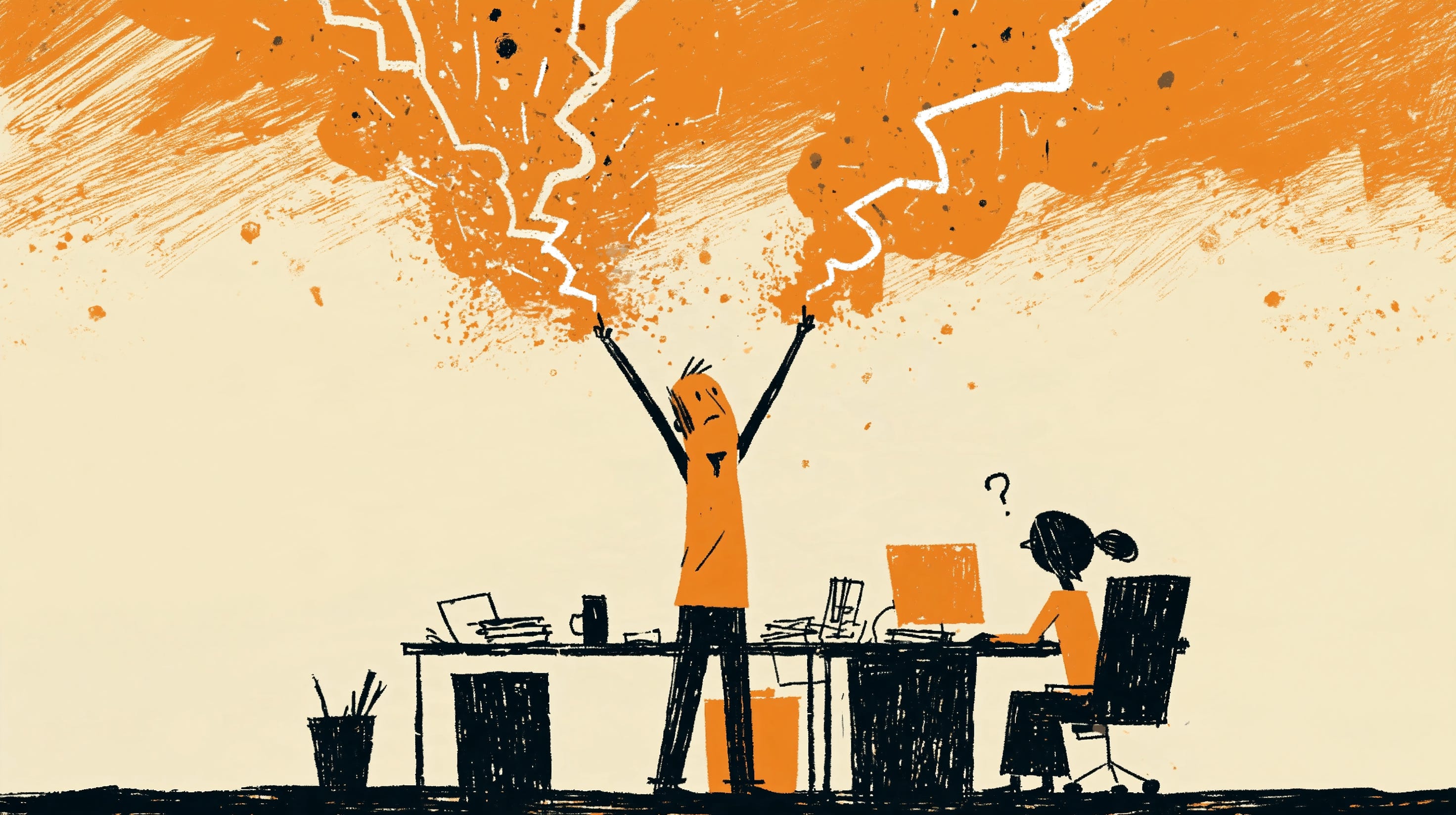
I was at an event recently where a speaker was asked her advice for beating burnout. ‘Get up and go for a walk’, she said. I could feel hundred eyes twitching as the audience tried to hold its composure.
Six years of experience of self medicating with a few thousand steps has taught us that walking alone isn’t enough to solve the problem of endemic workplace stress. Walking is glorious, yes for sure, but if your company runs on adrenaline a stroll around the block isn’t going to magic all of your problems away. Those Teams pings don’t answer themselves.
The issue is that we’re all looking for push-button solutions to systemic problems. When it comes to fixing work we’re seeking answers that are easy, immediate and individual. (With the obvious inference that the real solutions are complex, gradual and - yes - collective).
With that major caveat loaded upfront I was really taken by some research this week from Manoush Zomorodi. Zomorodi is a writer and podcaster who has previously written about the importance of boredom to the creativity process. She’s clear on the size of the challenge of contemporary work, ‘in 1950, 25% of the workday was sedentary. By 2019 it was over 80%'.’
Zomorodi first explored the impact of being at a desk on our energy and wellbeing. She took a five-minute walk every hour (at 2 miles per hour it was a very slow pace). Her blood sugar levels improved by 42%, there was a five point drop in her blood pressure and her mood and energy ‘dramatically improved’. Having seen big personal gains, she signed up twenty thousand participants in a scaled exploration of these actions. Participants reported fatigue dropping 25%, productivity also showed marked improvements.
Zomorodi has framed some of the issue as ‘screen apnea’ saying that sitting and staring at a screen causes shallow breathing. In this styling she stands on the shoulder of tech exec Linda Stone who coined the term ‘email apnea’ to interpret her own breathing pattern when answering messages.
I guess it brings us back to the speaker. I think she was half right. While I don’t think getting up and walking is going to fix burnout, we do need to address the current sedentary state of work. The evidence for getting up from our desk is real and has effect sizes far beyond what we might guess. If you’re making back-to-school resolutions getting up and walking around does seem to be one worth prioritising.
Hear Manoush Zomorodi talk about her research on Vox’s Gray Area.

Something of catch-up mode this week, as I’m calling out some of the best things I’ve seen over the summer.
If your organisation has contemplated AI-enabled job cuts, this longread about Meta/Facebook is a cautionary datapoint. The article paints a detailed picture of how Mark Zuckerberg’s firm became enchanted a vision of going ‘fully AI native’. This would having AI agents using AI tools, creating a rebooted Meta with far fewer employees. The unashamed objective was to replace some of the business’s old guard employees with bots - reducing some teams by 60%. (Rather than short-staffed, the inside jargon for this is ‘talent dense’.) Understandably as gossip about a first wave of job cuts broke out in the company employee sentiment dropped from 74% to 55% favourable. But then the problems began. There were reports that AI agents were taking ‘large-scale, disruptive actions that humans [were] unlikely to execute’. Major technical and security problems, like service disruptions or possible data leaks, surged by 40% year on year. Time firefighting issues rose 70%. Like a comic parody of the Sims, surging employee unhappiness led to Zuckerberg ordering an improvement in the quality of snacks provided to employees. Overall a cautionary note about the current capability of AI systems.
On the same topic, rather than destroy employment The Economist estimates that AI has created about one million new jobs in the US, (Archive link). One noteworthy data point is that customer-service roles have dropped by 10% in 3 years.
I was chatting to someone in the US over the summer who was doing two full-time jobs - both remote, both the same hours. In his first job ‘Craig’ finds himself in a deeply political environment where’s he’s been sidelined and overruled on key decisions. He took a new job with a startup which had courted him, begged him to join them, and told him he can be a big part of what they’re building. So he’s started work with them… he just didn’t quit the first one. This isn’t unique, the two job hustle is the topic of Reddit’s r/overemployed, a forum where people share tips on how to do double shifts. When I spoke to Craig last week, he was heading out to a meeting with the startup. He told me his last action is always the same: a simple heuristic: keys, phone, mouse jiggler. I can understand his caution, recent research suggests that 70% of US firms track their employees’ actions. (Probably, in truth, to catch people like him out!) I started investigating the concept of over-employment and found that the PAYE tax system makes it practically impossible in the UK. There are repeated episodes of employees being asked if they have another job because HMRC has informed on them. Do you do two full-time jobs? Get in touch, I’d love to talk to you on a podcast (anonymously of course).
Interesting article about how New York is accelerating office conversions to deal with its housing crisis. They’ve created over 10,000 new homes this year with conversion permits.
Goldman Sachs fired an executive for not responding quickly enough to a work email while he was on paternity leave. He sued the bank, and a tribunal awarded him £1.5m.
I presume it’s not real but it’s a fair reflection of how AI interviews feel
Looking to cause some chaos at work, this TikTok has a suggestion for you


Using culture to deliver famous customer hospitality - an icon talks
Danny Meyer is one of the most respected restaurateurs in the world. Beyond the success of the likes of Union Square Cafe, Gramercy Tavern and Shake Shack he’s also become famous for writing a book, Setting the Table, that has become an inspiration to hundreds of thousands of readers around the world. The book is used as training manual beyond the hospitality trade by businesses who want to be famous for providing strong customer service.
Danny talks about service being a monologue, whereas hospitality is a dialogue. In his new book, What Could Possibly Go Right?, he updates his story. His first book documented many slips on the way to running a series of beloved restaurants; he was proud that he’d never closed an eaterie, for example. The new book catalogues closures, missteps, Covid and an even an intervention by his leadership team when the culture of the business was on the wrong tracks.
Danny tells Bruce that restaurants are the perfect space to watch culture on fast forward, and how anyone can learn lessons from his businesses as they strive to be the most beloved venues in New York. Cracking listen.
Listen: website, Spotify, Apple and YouTube below:
Make Work Better? My philosophy has always been: Vacation Better. 🌴
In all seriousness, your point on physical environment is spot on. Slapping a 5-minute walk onto an 8-hour desk session in the same room is a band-aid. True cognitive reset usually takes a total change of scenery (and preferably a pool).