

I knew Adele was ruining everyone’s buzz. For years I thought it, but it wasn’t until this week that it clicked that she had been. I should clarify, I’m not talking about singer Adele. Far from being the Grammy winning superstar, Adele was a sales person who worked with me about a decade ago. Superficially Adele was a dream colleague. Generous with laughter, willing to play her part in creating fun chatter at our desks. Often arriving at the office with a captivating opener: ‘you’ll never guess what someone said to me today…’ If you met Adele for 20 minutes you’d come away saying she was a joy.
The only issue was that in team meetings Adele was relentlessly negative. Outside of meetings Adele would unburden herself about her latest gripe with anyone who would let her pull up a chair. She would often stir up feelings of distrust in her team mates. To Adele, everything that went wrong was part of a calculated plan hatched by her enemies. And she saw enemies everywhere.
Every workplace has things going wrong: broken promises by the big bosses, colleagues disappointed about missed expectations, interpersonal interactions that misfire. Sometimes when things go wrong the best thing to do is just shrug and carry on with it. Replaying and reviewing every mishap ends up spending hours focussing on disappointment. Happiness is defined by what you pay attention to, as Paul Dolan reminded me.
My instinct was that, for all the energy Adele brought to the team, she was actually making it an unhappier place. This week I’ve decided that hunch was right.
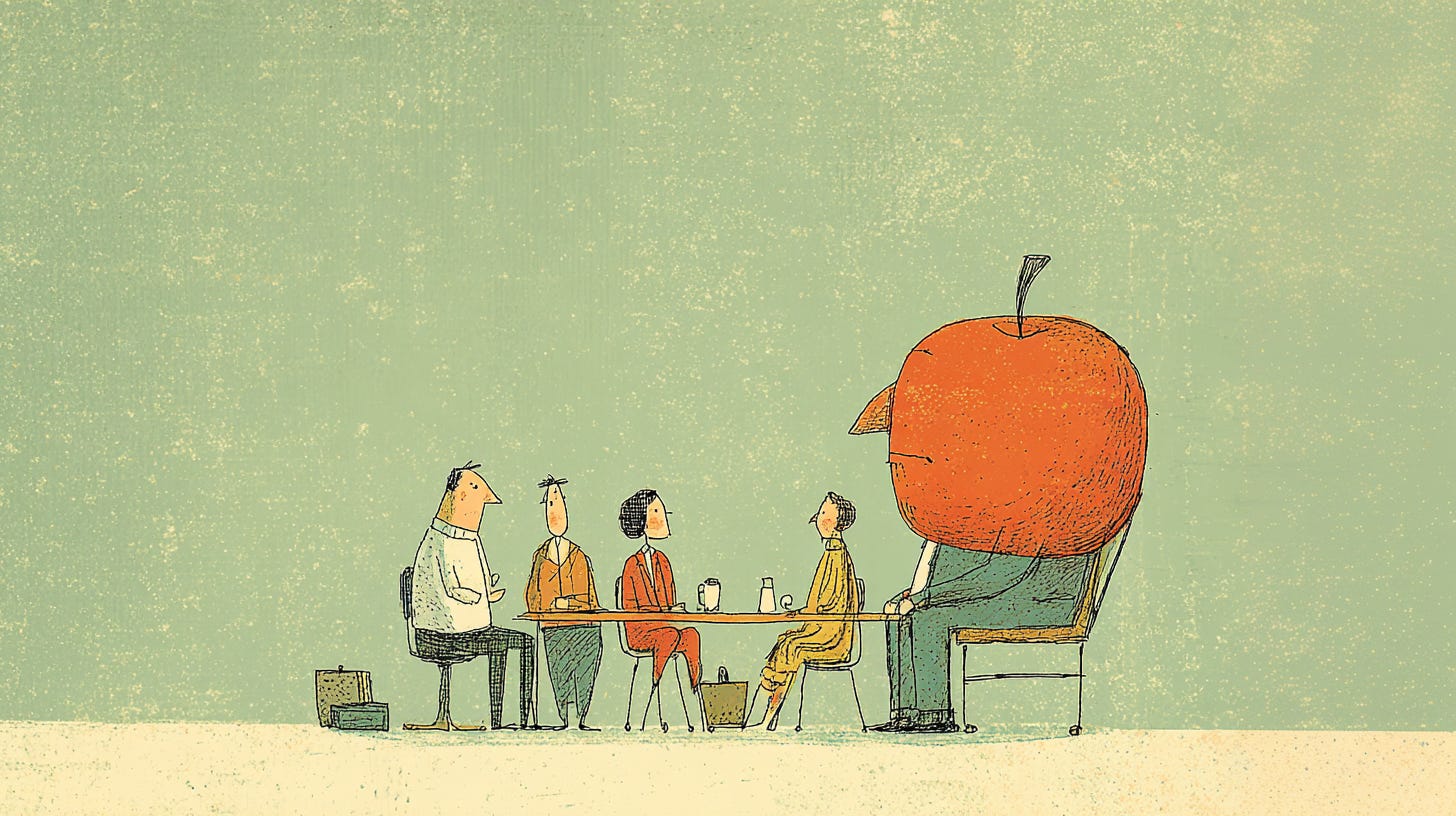
Across decades of research, it turns the best predictor of team performance isn’t the talent of the team or whether it includes superstar individuals, but rather it’s the behaviour of the worst person. A bad apple really can ruin a team.
In 2006, a researcher called Will Felps decided to see whether bad apples really could have an impact on teams. He recruited a drama student, Nick Fascitelli, and injected him into 60 work groups of business students. Felps varied the drama student’s mission, sometimes telling him to be a slacker, other times a downer and sometimes to act like a ‘jerk’. He was expecting that groups would resist someone disrupting their rhythm, that the groups would regulate to group norms, rather than be disrupted by one lone trouble maker. Turns out he was wrong. Fascitelli ruined everything.
In slacker mode Fascitelli would lean back, look bored, he’d yawn loudly. Incredibly, within minutes other members of the team were leaning back too. People would start discussing wrapping up and leaving. In depressive downer mode Fascitelli put his head on the table. Again others copied him. People started describing the task as pointless. Other people went further, describing life as pointless. In the jerk mode, soon the team was in passive-aggressive sync with him. Everything he touched turned to disaster.
Felps was surprised but he’d discovered that people don’t just notice each other’s mood, there’s a process of contagion going on. For many groups that contagion is created by the most senior person, but in other groups it’s just the loudest.
I’ve been thinking about this research all week after reading it in a new book by Kate Murphy called Why We Click.
There’s a positive redemption to the story. In one group Fascitelli’s bad apple trickery didn’t work - a saintly good apple figure seemed to disrupt the flow of the sabotage. The good apple didn’t know that there was disruption afoot, none of the group members did, he just asked questions, leaned in to the follow up answers and pointed out when people were in agreement. He managed to bring the heat down and the energy up.
Fascitelli himself expressed frustration that his efforts didn’t work when the good apple was around. After so much success elsewhere it must have been confusing that his mischief was suddenly missing. One calm and curious person managed to undo the disruption.
A few years later a different pair of researchers tried to measure the scale of influence other people have on us, trying to work out if we all have an emotional fingerprint. Are there really ‘radiators’ who leave us feeling energised and happy? Are there ‘mood hoovers’? Drain-type people who just ruin everyone’s vibe? They called the fingerprint ‘affective presence’, and found there was a small pattern.
The contagion was especially potent when it came to negative energy. They found that how a colleague made you feel accounted for about a quarter of your negative feelings at work, whereas your own personality made up less than a fifth. The ‘drain’ sitting opposite you had a bigger impact creating your bad day than you did yourself.
It brings me back to the Adeles of the world. It’s one thing to focus on building a team culture, trying to get things set up for success, but the bad apple research shows us that who is in the room also plays an important part in how that culture lands.
It poses an interesting question about what we should do in our teams. Putting up with a nightmare person might feel like part of the normal ups and downs of team work, but the research shows that it imposes an invisible tax on everyone else in the group.
Also, shout out to the good apples: if you’ve got someone who can keep the team flowing in harmony, who can help everyone stay on track despite the moaning around them, then they’re probably doing more for the team than they get credited with. Your good apples must be protected at all costs.
Read the original paper - why not drop it into AI or Google NotebookLM
(Of course if I didn’t know that sport chat turns half of any crowd off, I might have opened this post talking about the 30 million people signing a petition against Real Madrid’s Mbappe this week, the state of the culture at that club is quite the story).
I discuss this research - and more - with Kate Murphy in this week’s podcast
Kate Murphy is the author a new book called Why We Click. It combines the very latest research into interpersonal synchrony - how we form bonds with others.
It’s an intriguing read - at times compelling, at times challenging.
I chatted to her to understand ‘the bad apple effect’ and her take on whether we need face-to-face communication at all costs.
Listen: Spotify / Apple / website
Always like hearing people’s takes on their jobs. This week is how people use CRM tools:

I’m a regular listener to If Books Could Kill, an entertaining, forensic analysis of the claims made in non-fiction books. This week’s episode about Angela Duckworth’s Grit is jaw-droppingly brilliant. ‘This is straight up fucking lying,’ they say at one point - which is a good summary of the whole episode
‘I’m feeling really vulnerable right now.’ This long read about the fall of Chelsea’s Liam Rosenior is an interesting yarn. A good example that dropping something you read in a book doesn’t always work out the way you planned (especially in an alpha environment, I suspect)
AI usage is reducing human connection at work. Fascinating survey asking heavy users of AI how it is affecting their flow of work: ‘They were turning to it for personal support, including career advice and emotional validation—things that coworkers traditionally provide. Nonetheless, more than half of our study participants were lonely at work’. Part of the issue is that heavy users were finding AI to be invaluable. People reported that it helped them get on in their career, "AI showed me opportunities that I never saw before in my company"
Sitting all day will be the death of you (or will at least raise your risk of it by 57%)
Anyone else been checking those chickens non-stop since Bieberchella? Genuinely non-stop in my head

One bad apple can unless the leader has the strength to correct the behavior or move the person out.
Great insight, Bruce. I think there’s a difference between someone who is demanding to work for/with, working to high standards and expectations as opposed to someone who has ‘negative’ as a default setting. That’s a drain on energy and positivity. It often comes after years of working somewhere and seeing the same patterns repeated- that’s where HR/leadership/culture should focus on - keeping long term players positively motivated. Not easy. And the alternative is to help the negativity vibers move on somehow!